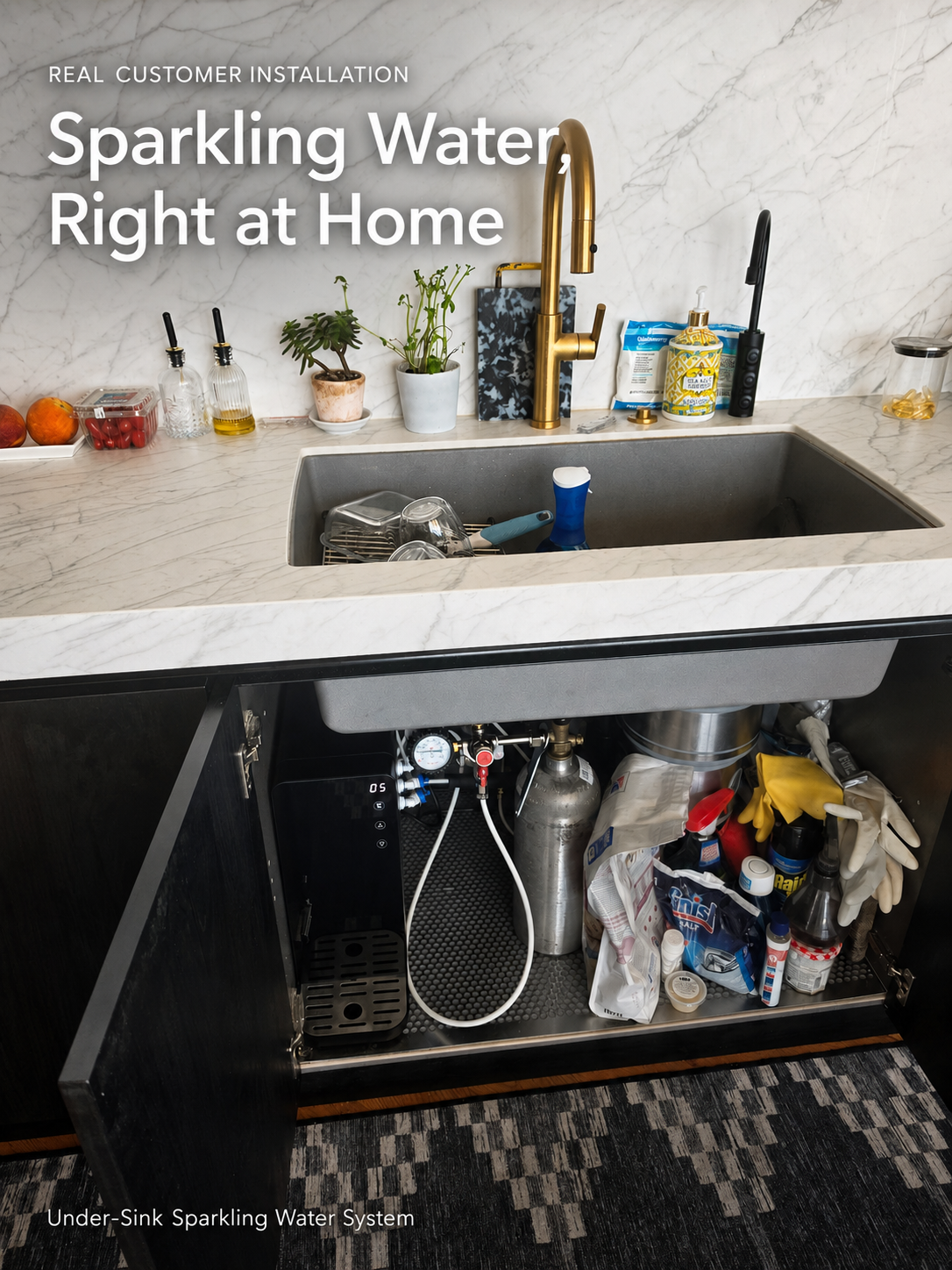
This U.S. customer paired a Liliumfaucet under-sink sparkling water machine with our black 3332B tap, adding three drinking water options beside their existing gold kitchen faucet.
The installation brings together a light, veined countertop and backsplash, dark cabinetry, and two contrasting faucet finishes. Above the sink, the compact black tap provides a dedicated place to pour drinking water. Below it, the machine and CO₂ equipment sit inside the cabinet.
For anyone considering a similar setup, this kitchen offers a useful example of how the system can fit around an existing faucet and kitchen design.
A Black Drinking Water Tap Beside a Gold Kitchen Faucet
The gold hot-and-cold faucet is a prominent feature in this kitchen. Its tall curved spout stands out against the pale backsplash, adding warmth to the sink area.
The smaller black 3332B sits beside it, creating a contrast that works well with the surrounding materials. Its black finish also picks up the color of the dark cabinetry below, helping the two parts of the kitchen feel connected.
This combination shows that a drinking water tap does not always need to match the main faucet. Here, the gold remains the focal point, while the black adds a quieter detail alongside it.
A black tap can also work well in kitchens with dark wood, charcoal cabinets or black hardware. Against a light countertop, its shape stands out clearly; within a darker kitchen, it can blend into the overall design.
Three Water Options in a Compact Fixture
The two faucets have different jobs.
The gold mixer continues to supply regular hot and cold water for washing dishes, rinsing vegetables and cleaning. The black 3332B provides sparkling water, chilled filtered water and room-temperature filtered water through the connected system.
That makes the drinking water tap a useful companion to the main faucet. There is no need to replace a mixer the homeowner already likes, and the three drinking water options come together in one compact fixture.
Its relatively small profile also helps preserve space around the sink. The addition brings more functionality without making two large faucets compete for attention.
Why Choose an Under-Sink Sparkling Water dispenser?
The main advantage of the under-sink arrangement is visible in the customer’s photo: the equipment stays below the counter, leaving only the drinking water tap above.
Kitchen worktops already accommodate plenty of everyday items. Keeping the sparkling water machine inside the cabinet leaves more surface available for preparing food and using the sink.
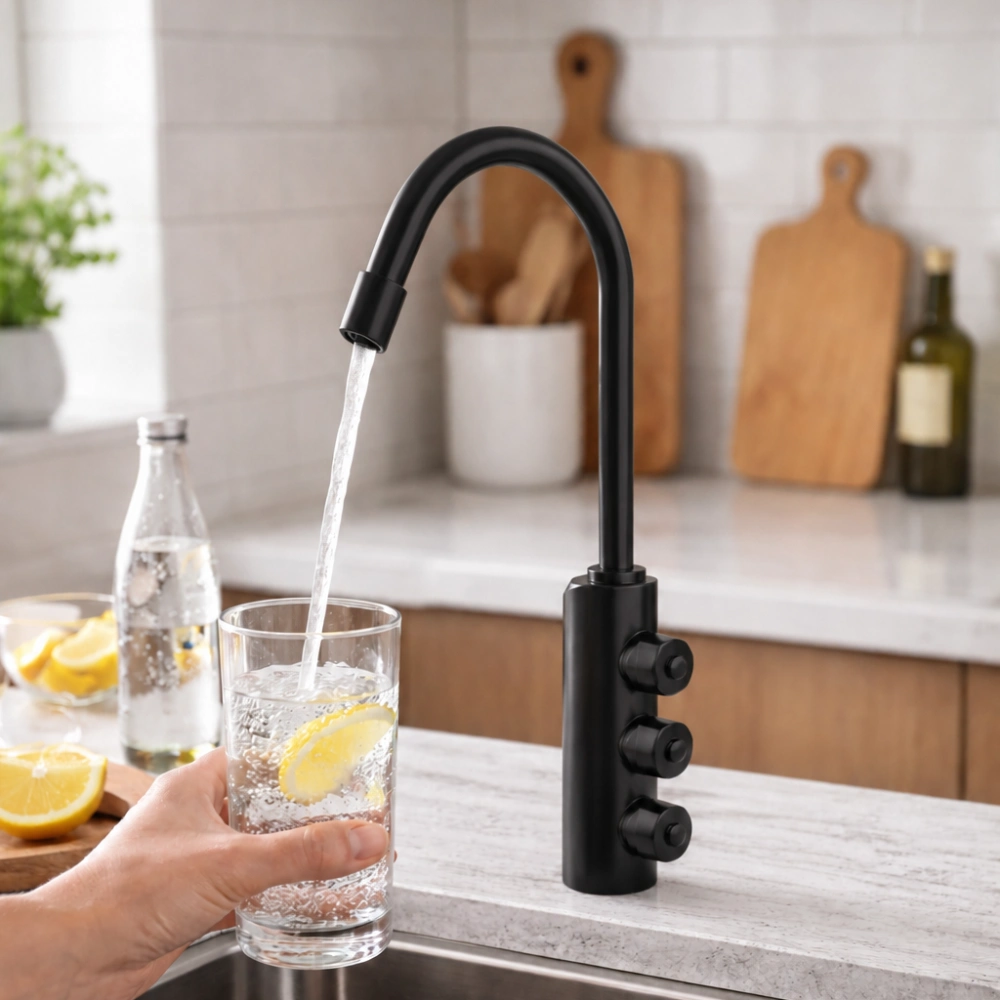
Once the system is connected, chilled and ready, water can be poured directly into a glass. There is no need to fill a separate carbonating bottle and attach it to a countertop machine for each batch.
For households that regularly buy sparkling water, this can also reduce the number of bottles or cans kept at home. There is less packaged water to carry into the kitchen, store and clear away afterward.
The trade-off is cabinet space. The machine, filter, CO₂ cylinder and connections all need a suitable place beneath the sink. Planning that space before installation helps make the system convenient to maintain as well as use.
The CO₂ Cylinder and Regulator Are Purchased Separately
For this setup, the CO₂ cylinder and pressure regulator need to be purchased separately. They are important parts of the installation, so it is worth choosing them before the machine is connected.
The cylinder supplies the CO₂ used to carbonate the water. Choose food-grade CO₂, and check local refill or cylinder-exchange availability before purchasing. For U.S. customers, finding a convenient local supplier can make future refills much easier.
Cylinder size should suit the available cabinet space. Allow room for the valve, attached regulator and tubing, rather than measuring the cylinder alone. It should remain upright, secured and accessible.
The regulator reduces the cylinder pressure to the working pressure required by the machine. Before buying one, confirm that:
- Its inlet connection matches the cylinder valve.
- Its adjustable pressure range meets the machine’s requirements.
- Its outlet connection is compatible with the system’s gas tubing.
A regulator that fits the cylinder may still require a suitable outlet fitting. If you are unsure, send us the cylinder and regulator specifications before ordering so we can help check the connections.
Adjusting the Level of Sparkle
Some people prefer a gentle fizz, while others enjoy a stronger sparkling-water bite. The CO₂ pressure setting is one factor that influences the result.
Start with the setting recommended for your machine, allow the system to chill and stabilize, then taste the water. If an adjustment is needed, make a small change and test again after the system has had time to respond.
Different regulators can have different control sensitivity and gauge markings. Turning one knob slightly may not produce the same pressure change as turning another. Read the pressure gauge and test the result rather than relying on the knob position alone.
Keep adjustments within the machine’s specified operating range. Higher pressure is not always the answer: water temperature, dispensing flow and incoming water conditions also affect the experience.
If the water is not as fizzy as expected, first check that the machine has cooled fully and the CO₂ supply is connected correctly. If dispensing becomes uneven or starts sputtering, check the setup instead of continuing to increase pressure.
A few careful tests during the initial setup can help you find a setting that suits your household.
Pairing the System With a Suitable Filter
The sparkling water machine should receive filtered drinking water. The water path is:
Household cold-water supply → drinking-water filter → sparkling water machine → drinking water tap.
For suitable source water, we generally recommend a compatible drinking-water filter that retains some minerals and provides sufficient flow to the machine.
Very intensive reverse-osmosis filtration can produce water with extremely low mineral content. This may change the taste and perceived sparkle, so it is worth discussing your filtration setup before connecting the system.
That does not mean every RO system is unsuitable. If you already have one, check its output flow and compatibility with us first. The right arrangement depends on both the incoming water and the filter being used.
The goal is to provide appropriate drinking water with a stable supply. Necessary treatment should never be removed simply to retain minerals.
A Useful Water Supply for Everyday Family Life
Having three drinking water options in one place makes the system useful for different preferences within a household.
Someone can pour chilled still water with lunch, another can choose sparkling water at dinner, and room-temperature filtered water is available when a cold drink is not wanted.
The system’s stated sparkling water production capacity is approximately 6–8 liters per hour under suitable conditions. This supports normal household use spread throughout the day, but it should not be confused with an unlimited continuous pour.
Filling individual glasses at mealtimes is different from filling several large bottles one after another. After larger draws, the machine needs time to replenish and recover its temperature.
Incoming water temperature, supply flow, cabinet ventilation and dispensing habits all influence performance. For a family considering the system, the most useful question is how water will be served during the day, rather than hourly capacity alone.
Leave Space for Maintenance, Too
One final detail is easy to overlook when planning an installation: everything needs to remain accessible after it has been fitted.
Leave the ventilation clearance required by the machine’s instructions, and keep stored household items away from its air openings. Tubing should run without being sharply bent or trapped beneath supplies.
The filter needs room for replacement, and the CO₂ cylinder must be removable for refilling. The regulator gauge and cylinder valve should also be easy to reach.
Before ordering, take a few photos of the cabinet interior and measure the usable space around the sink plumbing. Checking those details early helps avoid a layout that fits tightly but is difficult to maintain.
A Practical Addition to an Existing Kitchen
This customer’s installation brings more drinking water choices into the kitchen while keeping the existing gold faucet in place.
The compact black 3332B works with the dark cabinetry, contrasts with the light backsplash and complements the main faucet’s hot-and-cold functions. The under-sink equipment keeps the worktop available, with sparkling and still drinking water served at the sink.
If you are planning a similar installation, send us photos of your kitchen sink and cabinet. We can help you check the space, filtration connection and CO₂ equipment needed for your setup.
Frequently Asked Questions
Can I keep my existing kitchen faucet?
Yes. A dedicated 3332B sparkling water tap can sit beside your existing hot-and-cold faucet, provided there is a suitable mounting position and sufficient space beneath the sink.
Can I adjust how fizzy the water is?
The CO₂ regulator allows pressure adjustment within the machine’s permitted range. Make small changes, let the system stabilize and test the water. Temperature and dispensing flow also matter.
Do I need a separate filter?
The machine requires a suitable filtered drinking-water supply. Confirm whether your chosen package includes a filter or whether your existing filter is compatible.
Are the CO₂ cylinder and regulator included?
For the setup described here, both are purchased separately. Check their connections and specifications before buying.