
Modern kitchens are changing fast. More homeowners are moving away from separate drinking water faucets and choosing filtered water taps that combine hot, cold, and filtered water in one streamlined fixture.
The reason is simple: today’s kitchens are designed to be cleaner, smarter, and more minimal. An extra filter faucet can take up valuable sink space, require another countertop hole, and make the whole area look more cluttered.
As consumers pay more attention to drinking water quality, kitchen design, and sustainable living, the filtered water tap market continues to grow in 2026. Whether you are remodeling your kitchen, upgrading a new home, or looking for better product options for a home improvement store, a 3-way filtered water tap is now one of the most practical kitchen upgrades to consider.
In this guide, we’ll explain how filtered water taps work, what to look for before buying, and the 7 best filtered water taps worth considering in 2026.
What Is a Filtered Water Tap?
A filtered water tap is a kitchen faucet designed to provide regular tap water and filtered drinking water from the same fixture. In many cases, it combines hot water, cold water, and filtered water into one integrated tap.
Unlike a standard kitchen faucet, a filtered water tap does more than supply unfiltered tap water. Many models use a 3-way design, which allows one faucet to deliver:
- Hot water
- Cold water
- Filtered water
The main advantage is convenience. You do not need to install a separate drinking water faucet, and you often do not need to drill an extra hole in your sink or countertop. For modern kitchens, this creates a cleaner and more premium look.
How Does a Filtered Water Tap Work?
A filtered water tap usually works with separate internal water channels. Regular hot and cold tap water and filtered water may come from the same faucet body, but they do not share the same internal pathway.
A typical setup connects the faucet to hot and cold water lines, as well as to an under-sink filtration system. This may include an RO system, an activated carbon filter, or another under-sink water filter. When you switch to filtered water mode, the water passes through the filtration system before flowing through a dedicated filtered water channel.
This allows the faucet to work as both a regular kitchen faucet and a drinking water faucet.
Do Filtered Water Taps Mix Filtered and Unfiltered Water?
High-quality filtered water taps are designed to keep filtered and unfiltered water separate. Many 3-way kitchen faucets use separate internal channels so the filtered water has its own inlet, internal pathway, and outlet.
Some models also use food-grade tubing for the filtered water line. This helps reduce the risk of contamination after the water has already passed through the filter.
When comparing products, look for terms such as:
- 3-way design
- Separate filtered water channel
- Independent waterway
- Food-grade inner tube
These details can help you choose a faucet that is truly suitable for drinking water.
Why More Homeowners Are Choosing Kitchen Taps with Filtered Water Options
Homeowners are choosing filtered water taps for more than just convenience. This shift reflects a broader move toward cleaner kitchen design, better everyday efficiency, and more sustainable living.
Cleaner Kitchen Design
Traditional filtration setups often require two fixtures: a main kitchen faucet and a smaller drinking water faucet. While this setup works, it can make the sink area look crowded.
A 3-way filtered water tap combines multiple functions in one fixture. This reduces visual clutter and helps the kitchen look more organized. For open-concept kitchens, minimalist homes, and premium remodels, this is a major advantage.
Easier Everyday Use
With a filtered water tap, users do not need to move between two faucets. Washing dishes, rinsing vegetables, filling a coffee machine, and getting drinking water can all be done from one tap.
If the faucet also has a pull-out spray head, the experience becomes even more practical. A pull-out design makes it easier to rinse large sinks, clean cookware, wash produce, and reach the corners of the sink.
Better Sustainability
Filtered water taps can also reduce the need for bottled water. For households that regularly buy bottled water, installing a filtered water tap can help cut down on single-use plastic waste and reduce the hassle of storing and carrying bottles.
Over time, a filtered water tap can also help lower bottled water costs while making the kitchen more efficient.
The 7 Best Filtered Water Taps in 2026
The following list highlights 7 filtered water taps and related faucet solutions worth considering in 2026, based on functionality, design, brand positioning, and everyday kitchen use.
1. Liliumfaucet 3-Way Pull-Out Kitchen Faucet
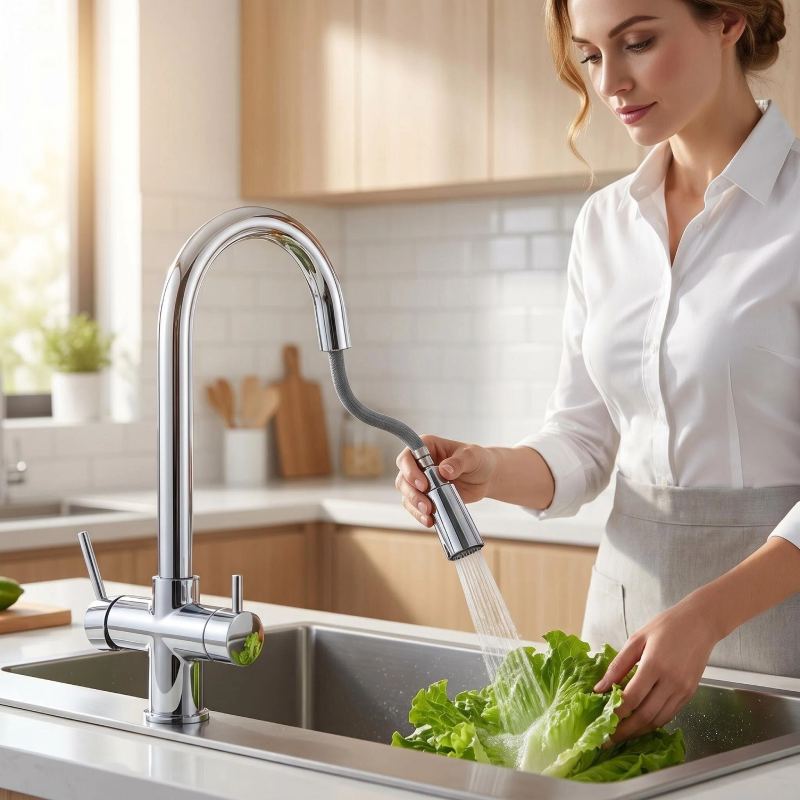
The Liliumfaucet 3-Way Pull-Out Kitchen Faucet is a practical all-in-one solution for modern homes. It combines hot water, cold water, and filtered water in one kitchen faucet, while also featuring a pull-out spray head for better cleaning flexibility.
For homeowners searching for a pull out filtered water tap, this type of design is especially useful. It helps reduce countertop clutter, eliminates the need for a separate filter faucet, and keeps the sink area looking clean. Compared with a standard fixed 3-way kitchen faucet with filter, the pull-out design is better suited for large sinks, deep sinks, and busy family kitchens.
Key benefits include:
- Hot, cold, and filtered water in one faucet
- Pull-out spray head for flexible cleaning
- Less countertop clutter
- A good fit for modern, minimalist, and premium kitchens
If you want a balance of style, functionality, and installation convenience, the Liliumfaucet 3-Way Pull-Out Kitchen Faucet is one of the top options to consider in 2026.
2. Moen ChoiceFlow™
Moen is one of the most recognized kitchen and bath fixture brands in the U.S. market. A product like Moen ChoiceFlow™ appeals to homeowners who want a trusted brand, reliable performance, and a faucet solution designed for everyday American kitchens.
Its biggest advantage is brand confidence. Moen products are widely known for practical design, broad availability, and strong consumer recognition. For homeowners, contractors, and remodeling projects, that brand familiarity can be a major selling point.
Best for:
- Homeowners who prefer a well-known U.S. brand
- Buyers who value support and availability
- North American kitchen upgrade projects
3. Kraus Purita™
Kraus Purita™ is a strong choice for kitchens with a modern or industrial design style. Kraus is well known in the kitchen sink and faucet market, and many of its products are popular in contemporary apartments, urban homes, and design-focused kitchens.
This type of faucet works well with under-sink filtration systems and is especially appealing to homeowners who like clean lines, darker finishes, stainless steel, or industrial-inspired kitchen hardware.
Key benefits include:
- Modern industrial design
- Suitable for under-sink filtration systems
- A good match for apartments and contemporary homes
- Strong visual appeal for kitchen remodels
4. Franke FilterFlow
Franke FilterFlow is a well-known option in the premium kitchen faucet category. Franke has a strong reputation in kitchen systems, including sinks, faucets, and accessories. Its filtered water solutions are often chosen by homeowners who want long-term durability and a coordinated kitchen setup.
FilterFlow is especially suitable for high-end kitchens, full kitchen remodels, and homes where the faucet needs to match other premium kitchen fixtures.
Best for:
- High-end residential kitchens
- Full kitchen renovation projects
- Buyers who prefer European kitchen hardware brands
5. InSinkErator 3-in-1 Tap
InSinkErator is widely known for garbage disposals and hot water systems. Its 3-in-1 tap solutions are designed for homeowners who want more than standard filtered water. Depending on the setup, these taps can support everyday hot and cold water needs along with filtered water or near-boiling water functions.
This makes them useful for households that frequently make tea, coffee, baby formula, or cook at home. However, these systems may require more planning, a higher budget, and professional installation.
Key benefits include:
- Multi-function water access
- Useful for frequent cooking and beverage preparation
- Can reduce the need for a kettle
- Ideal for convenience-focused kitchens
6. Grohe Blue Pure
Grohe Blue Pure is one of the more recognized names in the filtered kitchen faucet category. It is designed to deliver filtered water through a separate waterway, helping keep filtered water apart from regular tap water.
Grohe’s strengths include refined design, solid build quality, and strong brand recognition in premium kitchen fixtures. For homeowners who care about both drinking water quality and a polished kitchen look, Grohe Blue Pure is a dependable choice.
Best for:
- Premium kitchen designs
- Households looking to reduce bottled water use
- Buyers who want separate filtered and unfiltered water channels
7. Blanco Fontas II
Blanco Fontas II is another strong option for modern kitchens. Blanco is highly respected in the sink and kitchen faucet category, and the Fontas II is designed to combine regular mixed water and filtered water in one tap.
It is a good choice for homeowners who already use a Blanco sink or want a coordinated kitchen fixture system. The design is clean, practical, and built for everyday use.
Key benefits include:
- Clean modern appearance
- Reduces the need for a separate filter faucet
- Strong brand reputation in kitchen sink systems
- Good for homeowners who value durability and simplicity
How to Choose the Right Filtered Water Tap
Choosing the right filtered water tap is not just about appearance. You also need to consider your filtration system, sink layout, installation requirements, and daily kitchen habits.
Consider Your Existing Filtration System
Different homes use different water filtration systems, including:
- RO systems
- Activated carbon filters
- Under-sink water filters
- Multi-stage filtration systems
If you already have an under-sink water filter, make sure the faucet is compatible with your existing connections, tubing size, and water pressure. RO systems may have more specific requirements, especially if they include a storage tank.
Choose Between Standard and Pull-Out Designs
A standard filtered water tap has a simple and clean look. It works well for smaller sinks or kitchens that do not require heavy daily cleaning.
A pull-out filtered water tap is more flexible. It is better for large sinks, deep sinks, and households that cook often. The pull-out spray head makes it easier to rinse cookware, clean sink corners, and wash produce.
For busy kitchens, a pull-out design is usually the more practical choice.
Select the Right Finish
The finish of your faucet has a major impact on the overall kitchen design. Common finishes include:
- Brushed Nickel: timeless, subtle, and easy to match
- Matte Black: bold and modern, ideal for minimalist or industrial kitchens
- Chrome: bright, classic, and versatile
- Brushed Gold: more decorative and suitable for luxury-style kitchens
For the best result, choose a finish that matches your sink, cabinet hardware, lighting, and appliances.
3-Way vs Separate Filter Faucet: Which Is Better?
| Feature | 3-Way Faucet | Separate Filter Faucet |
|---|---|---|
| Countertop Space | ✓ | ✗ |
| Installation | Easier | More Complex |
| Appearance | Cleaner | More Cluttered |
| Cost | Lower Overall | Higher Overall |
For most modern homes, a 3-way faucet is the better choice. It saves countertop space, reduces the need for extra drilling, and creates a cleaner sink area.
A separate filter faucet can still be useful if you prefer a fully independent drinking water outlet. However, it takes up more space and can make the kitchen look more crowded. For homeowners who want a clean, modern, and efficient kitchen, a 3-way filtered water tap is usually the more balanced solution.
Installation Considerations Before Buying
Before buying a filtered water tap, check the following installation factors.
Compatible Water Filters
Not every filtered water tap works with every filtration system. Check the connection size, tubing type, filter compatibility, and recommended water pressure before buying.
Sink Hole Requirements
Most 3-way faucets only require one main installation hole. If you are replacing an existing kitchen faucet, installation may be straightforward. However, if the hole size does not match, you may need an adapter or professional help.
Water Pressure Requirements
Some filtration systems, especially RO systems, require proper water pressure to perform well. If your home has low water pressure, filtered water flow may be slower than expected.
DIY or Professional Installation
Some filtered water taps are suitable for DIY installation. However, if your setup includes an RO system, hot water tank, or more complex plumbing, professional installation is recommended. This helps prevent leaks, connection issues, and poor water flow.
Are Filtered Water Taps Worth It?
For many households, a filtered water tap is a worthwhile kitchen upgrade.
The upfront cost is usually higher than a standard kitchen faucet, but it can reduce long-term bottled water expenses. It also improves everyday convenience by combining washing, cooking, and drinking water functions in one fixture.
A filtered water tap can also improve the look and value of the kitchen. For homeowners planning to sell or rent their property, a clean and functional kitchen upgrade can make the space feel more premium.
Conclusion
Filtered water taps have become a major trend in modern kitchen design. They support better drinking water access, reduce countertop clutter, and fit well with sustainable living habits.
Among the available options, a 3-way faucet is one of the most balanced solutions. It combines hot, cold, and filtered water in one fixture while helping the kitchen look cleaner and more organized. For households that use the kitchen frequently, a pull-out design adds even more flexibility and convenience.
When choosing the right filtered water tap, consider your filtration system, sink layout, kitchen style, and budget. For homeowners who want both everyday practicality and modern design, products like the Liliumfaucet 3-Way Pull-Out Kitchen Faucet are especially worth considering in 2026.
FAQ
What is the best filtered water tap in 2026?
The best filtered water tap in 2026 depends on your budget, kitchen layout, and filtration needs. For most modern homes, a 3-way filtered water tap is the most balanced choice because it combines hot, cold, and filtered water in one fixture.
If you want the best overall convenience, a pull-out 3-way faucet such as the Liliumfaucet 3-Way Pull-Out Kitchen Faucet is a strong option because it saves countertop space and makes everyday cleaning easier. If you prefer a premium European brand, Grohe Blue Pure, Blanco Fontas II, and Franke FilterFlow are also worth considering. For homeowners who want instant hot water features, InSinkErator 3-in-1 taps may be a better fit.
Are 3-way kitchen taps worth it?
Yes, 3-way kitchen taps are worth it for many homeowners because they save space, reduce countertop clutter, and make filtered water easier to access. Instead of installing a separate drinking water faucet, a 3-way tap delivers hot, cold, and filtered water from one kitchen faucet.
This makes the sink area look cleaner and can also simplify installation. For modern kitchens, small kitchens, and kitchen remodels, a 3-way filtered water tap is often more practical than using a separate filter faucet.
Can I connect a filtered water tap to a reverse osmosis system?
Yes, many filtered water taps can be connected to a reverse osmosis system. A 3-way filtered water tap is commonly designed to work with under-sink filtration systems, including RO systems, activated carbon filters, and multi-stage water filters.
Before buying, check the faucet’s connection size, tubing type, and water pressure requirements. Some reverse osmosis systems use a storage tank and may require specific fittings, so it is important to confirm compatibility with both the faucet and the RO system.
Do filtered water taps need special maintenance?
Filtered water taps do not usually require complicated maintenance. The most important task is replacing the filter cartridge on schedule. The replacement interval depends on the type of filter, water quality, and household water usage.
In most homes, filter cartridges need to be replaced every few months to once a year. You should also clean the faucet aerator, check the water lines for leaks, and follow the manufacturer’s maintenance instructions to keep the filtered water flowing properly.
Do filtered water taps reduce limescale?
Filtered water taps can reduce limescale, but it depends on the filtration system connected to the tap. A standard activated carbon filter mainly improves taste and reduces chlorine, but it may not significantly reduce minerals that cause limescale.
If limescale is a major concern, look for a filtration system designed to reduce hardness minerals or scale buildup. Reverse osmosis systems and certain scale-reduction filters are usually more effective for reducing limescale than basic carbon filters.
Can I install a filtered water tap myself?
Yes, many DIY users can install a filtered water tap themselves, especially if they are replacing an existing kitchen faucet and using a standard under-sink filter. Most 3-way filtered water taps include separate connections for hot water, cold water, and filtered water.
However, professional installation is recommended if you are connecting the tap to a reverse osmosis system, an instant hot water tank, or complex plumbing. Hiring a plumber can help prevent leaks, pressure issues, and incorrect connections.
.jpeg?w=800&h=800)