
In Canada, healthy hydration and everyday convenience have become essential parts of modern home life. Many households regularly drink chilled water, room-temperature water, and sparkling water, but constantly buying bottled sparkling water can be expensive, inconvenient to carry, and wasteful due to single-use plastic.
If you want to eliminate the clutter of bottled water, avoid manually filling countertop machines, and enjoy room-temperature water, cold water, and crisp sparkling water straight from the tap, a plumbed-in sparkling water system may be the ideal solution.
That said, choosing the right system in Canada is not always straightforward. Cabinet sizes vary from home to home, winters are harsh, and local electrical and plumbing conditions should always be considered before installation. This guide will walk you through what a plumbed-in sparkling water system is, how it compares with a countertop soda maker, what Canadian homeowners should check before installation, and how to choose the right model for long-term convenience and value.
What Is a Plumbed-In Sparkling Water System?
What does “plumbed-in sparkling water” mean?
A plumbed-in sparkling water system connects directly to your home’s cold water supply, so there is no need to manually refill a water reservoir. The main unit is typically installed under the kitchen sink or inside a base cabinet, which helps keep the countertop clean and uncluttered.
The system is paired with either a dedicated sparkling water tap or a multifunction faucet installed on the countertop. With the touch of a handle or button, you can dispense water directly from the tap. Entry-level systems may offer room-temperature water and sparkling water, while more advanced models can also provide chilled still water, filtered drinking water, and in some premium configurations, hot water as well.
How is it different from a countertop sparkling water maker?
The difference between a countertop soda machine and a plumbed-in system is significant, especially in terms of convenience, appearance, and suitability for daily use.
A countertop machine usually requires you to fill a bottle manually, carbonate each serving separately, and keep the unit on the counter. It is a practical choice for occasional use, but it takes up valuable workspace and often feels less seamless in a busy kitchen.
A plumbed-in system, by contrast, is connected directly to the water line and is designed for instant, on-demand use. Because the main unit stays hidden below the counter, the kitchen looks cleaner and more integrated. It is especially well suited to households that drink sparkling water frequently and want a more premium, built-in experience.
Common system types in the Canadian market
In Canada, most plumbed-in sparkling water solutions fall into three general categories.
The first is a dedicated sparkling water tap, which is often the simplest option. It adds a separate tap for sparkling water while the main unit and CO2 cylinder are stored below the sink. This is a popular choice for homeowners who want a straightforward upgrade without replacing their main kitchen faucet.
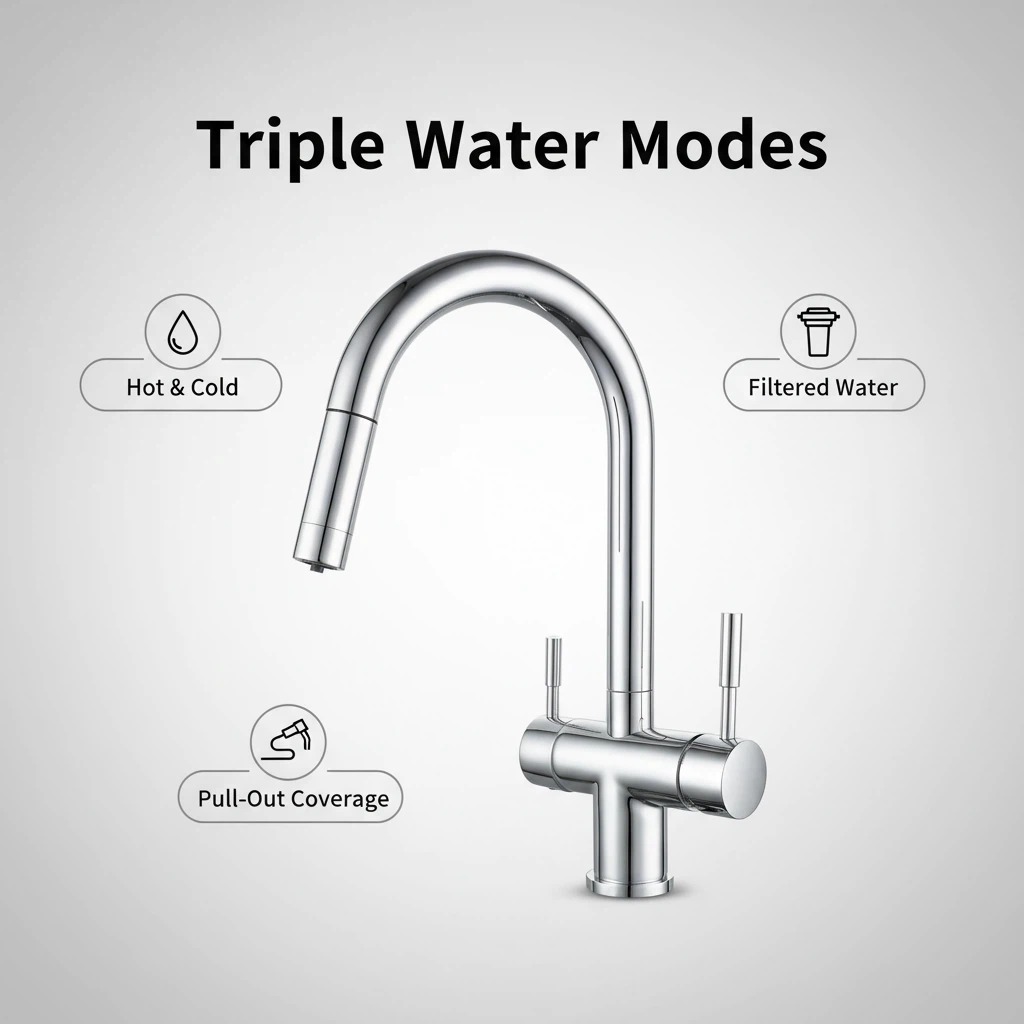
The second is a 3-way faucet system, which typically combines hot water, cold water, and filtered drinking water in one faucet. Some households start with this type of setup and later add a sparkling water module depending on the system design.
The third is a 5-way multifunction faucet, which is a more comprehensive option. These faucets can provide standard hot water, standard cold water, chilled water, filtered water, and sparkling water from a single integrated fixture. For homeowners planning a full kitchen renovation or aiming for a minimalist look, this type of all-in-one solution is often the most attractive.
Why More Canadian Households Are Choosing Plumbed-In Sparkling Water
Less bottled water and less plastic waste
Many Canadian families are actively looking for ways to reduce household waste. Bottled sparkling water may be convenient at first, but it creates ongoing plastic waste, takes up storage space, and requires constant repurchasing. A plumbed-in system helps reduce reliance on single-use bottles and makes it easier to maintain a lower-waste lifestyle.
Better for households that drink sparkling water often
For families who drink sparkling water every day, a built-in system is far more convenient than a countertop machine or store-bought bottles. Whether it is used for daily hydration, mixing drinks, or serving guests, a plumbed-in system can support high-frequency use without the repetitive steps required by manual soda makers.
A cleaner, more modern kitchen look
Canadian homes increasingly favor clean, open kitchen designs with uncluttered countertops. Because the main equipment is installed under the sink, only the faucet remains visible. This creates a more refined and built-in appearance while preserving valuable prep space.
Long-term convenience and value
Although a plumbed-in sparkling water system involves a higher upfront investment than a countertop unit, many homeowners find that it pays off over time. You no longer need to carry home cases of sparkling water, store bottles in the pantry, or make frequent trips to the grocery store. For long-term homeowners who use sparkling water regularly, the convenience and daily usability can make the investment worthwhile.
The 7 Questions Canadian Buyers Ask Most Often
1. Does it need electricity?
Most under-sink sparkling water systems that offer chilling or carbonation require electricity. In Canada, you should look for a model that is compatible with 110–120V household power. Some very basic systems may have fewer electrical requirements, but in general, if the unit chills water or powers internal components, you should plan to have a suitable outlet available in the cabinet area.
2. Does it need to connect to existing plumbing?
Yes. A plumbed-in sparkling water system must connect to the home’s cold water line. In most kitchens, this connection is made below the sink. Depending on the system and the homeowner’s experience level, installation may be handled by a professional plumber or completed as a DIY project by someone comfortable working with water lines and fittings. Proper installation is essential to reduce the risk of leaks and ensure reliable performance.
3. Does it need a filter?
Not always. Some systems include filtration, while others do not. This is an important detail to verify before purchasing. In areas where tap water has noticeable hardness, chlorine taste, or odor, a filter can improve water quality and flavor. In areas with good municipal water, some homeowners may choose to install the system without an additional filter.
Some users also prefer to avoid overly aggressive filtration. Depending on the system and water chemistry, extremely purified water may affect carbonation performance or taste preferences. For many households, a standard drinking water filter is a practical middle ground.
4. How often does the CO2 cylinder need to be replaced?
This depends on how often your household drinks sparkling water. A small household with moderate use may go several months before replacing a standard CO2 cylinder. Larger families or households that consume sparkling water heavily may need to replace it more often. Replacement timing will vary by cylinder size, carbonation level, and daily usage habits.
5. Will Canada’s winter climate affect performance?
Under normal indoor conditions, winter weather should not be a problem. A plumbed-in sparkling water system installed in a heated kitchen will generally operate normally. However, it should not be installed in an unheated garage, outdoor kitchen, or other freezing environment. Low temperatures can damage internal components, freeze water lines, and increase the risk of leaks.
6. How much cabinet space is required?
Before buying, you should measure the available cabinet space carefully. The system may need room for the main unit, CO2 cylinder, water filter, hoses, and future maintenance access. It is also wise to leave some clearance around the equipment for ventilation and service. Tight cabinetry can make installation and future replacement of filters or cylinders more difficult.
7. Is it better for a new kitchen or a renovation?
Both are possible. In a new kitchen, it is easier to plan for electrical outlets, water connections, and faucet placement in advance. In an existing kitchen, many homeowners can still retrofit a plumbed-in system using the current sink cabinet and available tap holes, provided there is enough space and the countertop can accommodate the faucet.
What to Check Before Installing a Plumbed-In Sparkling Water System in Canada
Confirm there is enough space under the sink
Measure the height, width, and depth of the cabinet area before choosing a system. Be sure to account for drain pipes, garbage disposals, and any other obstructions that may limit usable space. A unit that looks compact on paper may still be difficult to fit if the cabinet layout is crowded.
Make sure a proper electrical outlet is available
Most systems need a grounded outlet near the installation area. If there is no outlet under the sink, you may need an electrician to add one safely. Avoid relying on unsuitable extension cords or makeshift power setups in wet areas.
Check that your water pressure is appropriate
Stable household water pressure is important for proper operation. If pressure is too low, sparkling water output may be weak or flow slowly. If pressure is too high, it may place unnecessary stress on hoses and fittings. If you are unsure about your home’s plumbing conditions, it is wise to have them checked before installation.
Decide whether you want a separate filter system
Not every household needs the same level of filtration. If you are sensitive to taste, odor, sediment, or water hardness, adding a compatible filter may be worthwhile. If your local water quality is already satisfactory, you may prefer a simpler setup.
Verify faucet hole compatibility and countertop requirements
Some homes already have an extra hole available for a secondary faucet or soap dispenser. Others may require a new hole to be drilled into the countertop. If your countertop is made from stone, quartz, or other hard materials, you may need professional drilling to avoid cracking or damage.
How to Choose the Right Plumbed-In Sparkling Water System for a Canadian Home
Choose based on the functions you actually need
Start by deciding which water options matter most to your household. Some homeowners want only sparkling water and still water. Others want chilled water, filtered water, and sparkling water in one system. If you are renovating your kitchen and want a one-time upgrade, a full multifunction setup may make sense. If your needs are more basic, a simpler system may be the better value.
Choose based on your household size and usage habits
A small household with light sparkling water use may do well with a compact entry-level system. A larger family that drinks sparkling water every day may benefit from a more powerful unit designed for heavier use and consistent performance.
Choose based on installation style
Some people prefer a dedicated tap because it allows them to keep their existing faucet. Others prefer a multifunction faucet to maintain a cleaner and more streamlined look. If design is a top priority, an integrated faucet system is often the most elegant option.
Choose based on long-term maintenance
The easiest system to own is not always the cheapest one upfront. Consider how easy it will be to replace CO2 cylinders, source compatible filters, clean the system, and access service parts in Canada. A product that uses common fittings and readily available consumables may save you time and frustration in the long run.
Plumbed-In Sparkling Water System vs. Countertop Soda Maker
Who should choose a plumbed-in system?
A plumbed-in sparkling water system is a strong fit for homeowners who are renovating a kitchen, want a clean and built-in appearance, and drink sparkling water often. It is also a practical choice for households that want a more premium daily experience and would rather not deal with filling bottles manually.
Who should choose a countertop machine?
A countertop soda maker may be the better choice for renters, temporary living situations, smaller budgets, or occasional use. If you do not want to modify plumbing or cabinetry, a countertop unit is the simplest option.
The simplest recommendation
If you want daily convenience, a cleaner kitchen design, and a solution that supports long-term use, a plumbed-in system is often the better investment. If you want portability, a lower upfront cost, and no installation, a countertop machine remains a practical alternative.
Common Mistakes Canadian Buyers Make
Mistake 1: Assuming every system includes filtration
Not all sparkling water systems include filters. Some require a separate filtration setup, and others are designed to work with optional add-on filters. Always confirm what is included before buying.
Mistake 2: Assuming that faucet installation is the only requirement
A suitable faucet opening is only part of the equation. You also need enough space below the sink, the right electrical setup, appropriate water pressure, and room for the CO2 cylinder and maintenance access.
Mistake 3: Assuming every model is equally suitable for Canadian homes
Electrical compatibility matters. Buyers in Canada should make sure the system is designed for 110–120V residential power. It is also important to consider local installation conditions and climate-related placement limitations.
Mistake 4: Assuming stronger carbonation is always better
Carbonation level is a matter of preference. Some users prefer bold, highly carbonated water, while others prefer a smoother, gentler texture for everyday drinking. The best choice is a system that matches your taste and use habits rather than chasing maximum intensity.
Who Is a Good Candidate for a Plumbed-In Sparkling Water System?
This type of system is a great fit for households that drink sparkling or chilled water often, care about reducing bottled water waste, and want a cleaner, more modern kitchen. It is especially appealing to homeowners who are planning a renovation, upgrading an older kitchen, or adding a dedicated beverage zone such as a basement bar or home office refreshment area.
Final Thoughts: Is a Plumbed-In Sparkling Water System Worth It in Canada?
For many Canadian homeowners, the answer is yes. If you plan to stay in your home long term, drink sparkling water regularly, value a cleaner countertop, and want a more convenient day-to-day hydration setup, a plumbed-in sparkling water system can be an excellent investment.
On the other hand, if you only drink sparkling water occasionally, are renting, or want to keep your budget as low as possible, a countertop soda maker may be the more sensible choice.
The best system for your home will depend on four key factors: how often your household will use it, how much under-sink space you have, which water functions you want, and what level of maintenance you are comfortable with over time. Once you evaluate those factors carefully, choosing the right setup becomes much easier.
FAQ
Can you install a plumbed-in sparkling water system in Canada?
Yes. These systems can be installed in Canadian homes as long as the kitchen has suitable plumbing access, adequate cabinet space, and compatible power where required. Installation may be completed by a professional or, in some cases, by experienced DIY users depending on the system.
Does a plumbed-in sparkling water system need a filter?
Not necessarily. Some households add filtration to improve taste or reduce sediment and chlorine, while others choose a simpler setup without a separate filter. It depends on local water quality and personal preference.
Is a plumbed-in sparkling water system suitable for a small kitchen?
Yes, it can be. Because the main components are installed under the sink, the countertop remains clear. Compact systems are available for kitchens with more limited cabinet space, though measurements should always be checked carefully before purchase.
Will Canada’s winter weather affect the system?
Indoor installation in a heated kitchen is generally not a problem. However, the system should not be installed in spaces that may freeze, such as outdoor areas or unheated garages.
Which is better: a plumbed-in sparkling water system or a SodaStream-style countertop machine?
Neither is universally better for everyone. A plumbed-in system is usually better for frequent daily use and a built-in kitchen look, while a countertop machine is often better for lower budgets, portability, and homes where installation is not practical.
Is a 3-way or 5-way faucet with sparkling water worth it?
For homeowners who want a cleaner countertop and a more integrated kitchen design, it can absolutely be worth it. A multifunction faucet is especially attractive in new kitchen projects or full remodels where convenience and appearance are both priorities.
.jpeg?w=800&h=800)
.jpg?w=375&h=247)